On this page
Key takeaways
- Start with your goal in business terms (calls, bookings, sales or leads), then judge every agency against it.
- Ask for proof you can check: named case studies with dates, data sources and screenshots, plus a client you can call.
- A good agency explains every change it makes and works within Google Search Essentials. Secret methods and bulk links are a warning sign.
- Read the contract before you sign: term, notice period, what is included each month, and who owns the accounts and content.
- No one can promise a #1 ranking. Google says so itself, so treat any guarantee as a reason to walk away.
Most SEO agencies sound the same on a sales call. They all promise more traffic, better rankings and a monthly report. The difference shows up months later, in whether your phone rings more often.
This guide shows you how to choose an SEO agency before you’ve spent anything: what an agency should do, when you need one, an 8-step way to compare them, the questions to ask, and the red flags Google itself warns about. It works the same whether you call it an SEO agency or an SEO company.
What does an SEO agency do?
An SEO agency helps your business get found in Google, Bing and, more and more, in AI answers. Google’s own guide, Do you need an SEO?, lists what a good SEO can help with, including:
- A review of your site’s content and structure.
- Technical advice on hosting, redirects, error pages and JavaScript.
- Content development and keyword research.
- Expertise in specific markets and locations.
- SEO training for your team.
- Optimizing for generative AI, such as Google AI Overviews and ChatGPT.
In a monthly plan, that usually turns into a fixed set of work: technical fixes, new and improved pages, local SEO and your Business Profile, outreach for links and mentions, and a report that ties the work to results. If AI search matters to you, ask how they handle it. Our guide to generative engine optimization covers what that work involves.
Do you need an SEO agency?
Not always. Google says a small local business can probably do much of the work itself, starting with its SEO Starter Guide. An agency makes sense when one of these is true:
- You compete with businesses that already invest in SEO.
- You’re planning a new site or a redesign. Google calls this a great time to hire, and the earlier the better.
- Your traffic or leads have dropped and you don’t know why.
- You sell in several locations or countries.
- Nobody on your team has the time or skills to do it every month.
SEO agency vs freelancer vs in-house
An agency isn’t the only option. Here’s how the four common choices compare:
| Option | Best for | Watch out for |
|---|---|---|
| Freelancer | Small sites and single tasks, on a lower budget | One person’s time and skills. Technical work, content and links rarely all sit with one freelancer. |
| SEO agency | Ongoing work across technical SEO, content, links, local and AI search | Who actually does the work. A senior pitch can turn into a junior account manager. |
| In-house SEO | Large sites with enough work for a full-time role | A salary plus paid tools, and one hire rarely covers every skill. |
| SEO consultant | Teams that can do the work but need senior strategy, audits or a second opinion | Advice only. Your team still has to carry out the changes. |
Price follows the choice. In Ahrefs’ survey of 439 SEO providers, freelancers average about $1,349 a month and agencies about $3,209. Both are upper-end estimates, because Ahrefs assumed each provider charges the top of its price band. Our guide to how much SEO costs has the full breakdown.
If you only need senior advice, see our SEO consulting services.
How to choose an SEO agency: 8 steps
1. Set the goal in business terms
Before you speak to anyone, write down what success means for you: more calls, bookings, online sales or qualified leads, and in which cities or countries. “Rank higher” isn’t a goal, because rankings for the wrong terms bring no customers.
A clear goal also makes proposals easy to compare. The right agency will talk about the result you named, not just traffic.
2. Shortlist agencies with experience in your industry and market
Google suggests asking about experience in your industry, your country or city, and international sites if you sell abroad. A dental practice, an online store and a B2B software company need very different work. Look for case studies from businesses like yours, in markets like yours.
3. Ask for proof you can check
Good proof has a business name, a date range and a data source, ideally a screenshot from Google Search Console or GA4. “We grew a client’s traffic by 300%” with no name or date tells you nothing.
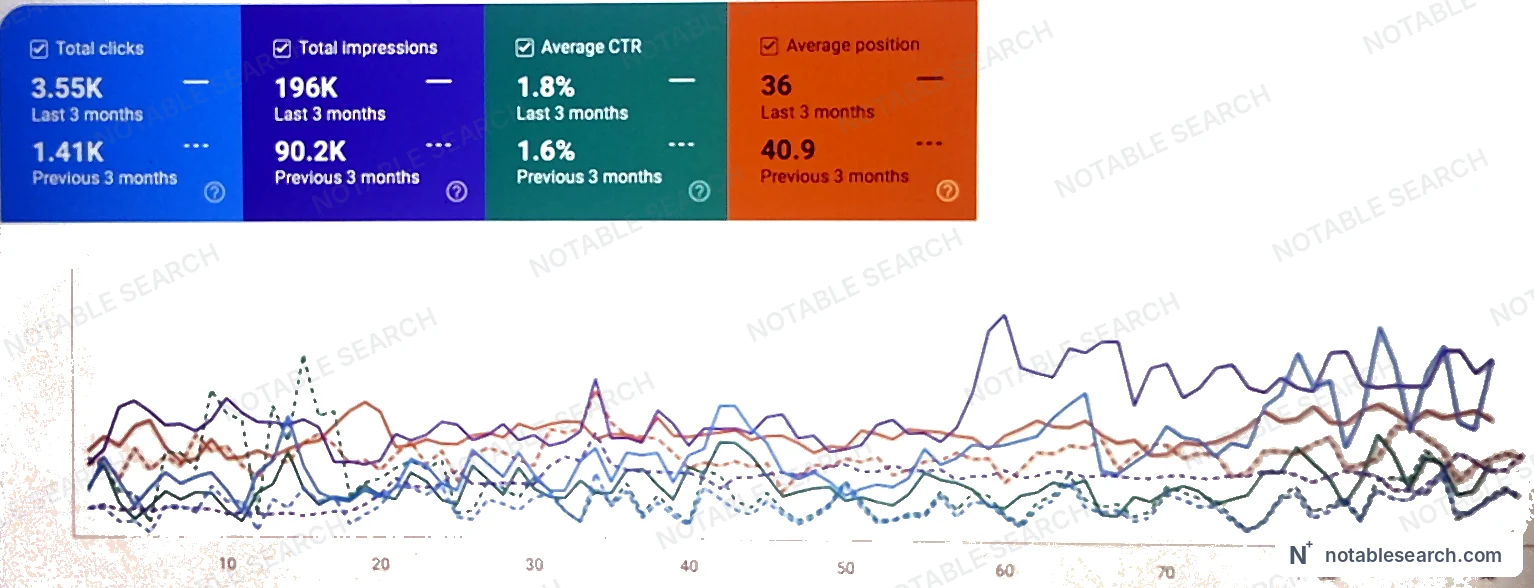
This is the standard we hold ourselves to. In the World Trip Deal case study, an online travel agency in the UAE, Google clicks grew 152% in three months, from 1.41K to 3.55K, and the Search Console screenshot is on the page. Then ask for a reference: Google recommends checking with past clients whether the SEO was useful, easy to work with and got results.
4. Ask how they will do the work
Ask for a plan for the first 90 days: what they’ll fix first, what they’ll build and how they’ll earn links. Google says an SEO should share every change it makes to your site and the reasoning behind it. If an agency won’t explain its methods, that’s your answer.
5. Check their methods against Google’s rules
Ask whether they follow Google Search Essentials, then check how they build links. Google’s spam policies treat buying or selling links for rankings as link spam. Packages of “100 links a month” for a small fee usually mean links that can hurt you. Real link building is outreach, digital PR and content other sites want to cite.
The same goes for content. Mass-produced pages written only to rank, by AI or by people, can break the same spam policies.
6. Find out exactly what’s included and who does it
Ask for the monthly scope in numbers: pages or articles, links, technical hours, local SEO, reports and calls. Then ask who does the work. A senior strategist on the sales call and a junior on the account is a common gap.
Ask what the report will show too. It should track the goal from step 1, such as calls, leads or sales from organic search, not just rankings. In the Camberley Cars case study, a taxi company in Surrey, UK, the headline is the result the owner cares about: 310 calls from its Google Business Profile between December 2025 and May 2026.
7. Read the contract and keep control of your accounts
Check the minimum term, the notice period and what happens when you leave. Long lock-ins with no exit protect the agency, not you. Make sure your website, content, Google Business Profile, Search Console and GA4 stay in your name, and that the agency gets user access rather than ownership.
Google’s Search Console help explains the permission levels. Stay the owner, and give each person only the access their work needs.
8. Start with an audit
A written audit shows how an agency thinks before you commit to a monthly plan. Google says an audit should give realistic estimates of improvement. It also says to give an SEO read access to Search Console at that stage, not write access.
Compare two or three audits side by side. The best one explains your biggest problems in plain language and puts them in order. The weakest one is a long automated list with no priorities.
Want to see how we’d approach your site?
Get a free written audit first. No sales pitch: just the issues holding your site back, in order, emailed to you.
Questions to ask an SEO agency before hiring
Most of these come from Google’s guide. We’ve added the ones about scope, people and contracts.
Results
- Can you show examples of past work, with business names, dates and data sources?
- Can I speak to a current or past client?
- What results do you expect for us, by when, and how will you measure them?
- Do you have experience in my industry and my country or city?
Methods
- Do you follow Google Search Essentials?
- How do you build links, and can I see examples?
- How do you handle AI search, such as Google AI Overviews and ChatGPT?
- Will you share every change you make and explain why?
Work, people and contract
- Exactly what is included each month?
- Who will do the work, and who will I speak to?
- What will the monthly report show, and how often will we talk?
- What is the minimum term, and how much notice do I give to stop?
- Who owns the accounts, content and data if we part ways?
Listen to how they answer as much as what they say. Google also suggests checking whether the SEO seems interested in you and your business. If they aren’t, find someone else.
SEO agency red flags
Google’s guide is blunt on the biggest one: “No one can guarantee a #1 ranking on Google.” Walk away if you see any of these:
- Guaranteed rankings, or a promise of page one by a set date.
- A “special relationship” with Google or a “priority submit” service. Google warns against both.
- Cold emails that promise rankings or warn of “errors” without showing them. Google tells you to be wary of firms that email you out of the blue.
- Secret methods they won’t explain.
- A link back to the agency as a condition of the deal. Google says you should never be required to link to an SEO.
- Bulk link packages, private blog networks or “thousands of backlinks”.
- Reports with no business numbers: rankings and traffic charts, but nothing about calls, leads or sales.
- The agency owning your accounts, domain or content instead of you.
- Long contracts with no way out if the work isn’t delivered.
One more point from Google: you are responsible for what any company you hire does to your site. If an agency’s shortcuts lead to a penalty, it’s your site that pays for it.
How we answer these questions
We’d rather you hold us to this checklist than take our word for it. Here’s where Notable Search stands:
- Proof: our case studies name the business, the dates and the data source, with screenshots from the reports. The results are SEO our founder has led.
- People: we’re founder-led. The founder plans and leads the work, without layers of account managers in between.
- Price and terms: published plans from $399 a month, a 3-month minimum, then month to month, with no setup fees. See our pricing page.
- No guarantees: we don’t promise rankings. We agree on the goal, show the plan and report on it every month.
FAQ
How do I choose the right SEO company?
Set your goal in business terms, shortlist companies with experience in your industry and market, ask for dated proof you can check, and ask how they will do the work. Then compare scope, people and contract terms, and start with an audit before you sign a monthly plan.
What questions should I ask an SEO agency before hiring?
Ask for past results with names, dates and data sources, a client reference, what results they expect and by when, whether they follow Google Search Essentials, how they build links, what is included each month, who does the work, the minimum term, and who owns the accounts and content.
What does an SEO agency do?
An SEO agency helps your business get found in search. That covers technical fixes, content and keyword research, local SEO and your Google Business Profile, earning links and mentions, optimizing for AI search, and reporting on the results.
Is it better to hire an SEO agency or a freelancer?
A freelancer suits small sites and single tasks on a lower budget. An agency suits ongoing work that needs several skills at once, such as technical SEO, content, links and local SEO. Whichever you choose, check who does the work and ask for proof.
Can an SEO agency guarantee first page rankings?
No. Google says no one can guarantee a #1 ranking on Google. An honest agency agrees on a goal, explains its plan and reports on progress every month instead.
Sources
- Do you need an SEO?, Google Search Central, updated June 2026
- Spam policies for Google web search, Google Search Central
- Managing owners, users, and permissions, Search Console Help
- SEO Pricing: How Much Does SEO Cost? 439 People Polled, Ahrefs, updated August 2024