
On this page
Key takeaways
- GEO is SEO with a different finish line: being named and cited inside AI answers, not only ranked in the links below them.
- Google says AI Overviews and AI Mode run on its core ranking systems, with no extra requirements. A page must be indexed and eligible for a snippet.
- ChatGPT search needs OpenAI’s OAI-SearchBot allowed. Microsoft Copilot draws on Bing. Check both, not just Google.
- Clear service pages, consistent business details and real mentions on trusted sites decide who gets named.
- llms.txt and “write for AI” tricks don’t move Google’s AI features. Measure citations in Search Console, Bing Webmaster Tools and a tracked prompt list.
Ask ChatGPT for the best airport taxi in Camberley and you get one or two names, not ten blue links. Generative engine optimization (GEO) is the work that decides whether your business is one of those names.
This guide covers what GEO is, how it differs from SEO, and the seven steps behind our clients’ citations in ChatGPT, Google AI Overviews and Microsoft Copilot, with the same dated data we report to them.
What is generative engine optimization (GEO)?
Generative engine optimization is the practice of making a business easy for AI engines to find, understand and trust, so they cite or name it when they write an answer. The engines that matter today are Google AI Overviews and AI Mode, ChatGPT, Perplexity, Gemini and Microsoft Copilot.
The term comes from a research paper, GEO: Generative Engine Optimization, by researchers at Princeton University and IIT Delhi. It was first posted in November 2023 and presented at the KDD 2024 conference. In their tests, some content changes raised a source’s visibility in AI answers by up to 40%, and the effect varied by topic.
You will also see other names for the same goal: answer engine optimization (AEO), LLM SEO, AI search optimization and AI SEO. UK and Australian writers often spell it “generative engine optimisation”. The labels differ. The job is the same.
GEO vs SEO: what changes and what doesn’t
Google has been direct about this. Its May 2026 guide to optimizing for generative AI features calls the work “still SEO”, and its AI features page says there are no additional requirements to appear in AI Overviews or AI Mode. A page only needs to be indexed and eligible to show in Google Search with a snippet.
What changes is the finish line, and how you measure it.
| SEO | GEO | |
|---|---|---|
| Goal | Rank in Google’s results and Maps | Be named or cited inside AI answers |
| Where you appear | Google and Bing results, Maps | AI Overviews, AI Mode, ChatGPT, Perplexity, Gemini, Copilot |
| What earns the spot | Relevance, links, technical health, reviews | All of those, plus clear business details and mentions on sources AI engines read |
| What you count | Rankings, clicks, leads | Citations, mentions, share of answers, and still leads |
| Where you measure | Search Console, GA4, rank tracking | Search Console, Bing Webmaster Tools AI Performance, tracked prompts |
GEO doesn’t replace SEO. In our clients’ reports, the pages AI Overviews and AI Mode cite are often the same pages that already rank well on Google. Weak SEO rarely turns into strong AI visibility.
How AI engines decide which businesses to name
An AI engine writes its answer from pages it can retrieve, then names the sources and businesses it trusts most for that question. Three things follow from that.
- Access comes first. Google’s AI features use the normal Google index. ChatGPT search relies on OpenAI’s search crawler, OAI-SearchBot, and OpenAI says sites that opt out of it won’t be shown in ChatGPT search answers. Microsoft Copilot draws on Bing.
- Clarity decides the match. The engine has to know exactly what you do, where and for whom. A vague page loses to a specific one.
- Agreement builds trust. When your site, your Business Profile, your reviews and other websites all say the same thing about you, an AI engine has a safer answer to give.
How to get cited by ChatGPT and Google AI: 7 steps
1. Let the right crawlers in
Check robots.txt, your CDN and your firewall. Googlebot and Bingbot must reach every page you want cited. For ChatGPT, allow OAI-SearchBot.
User-agent: OAI-SearchBot
Allow: /

User-agent: PerplexityBot
Allow: /
GPTBot is OpenAI’s training crawler and a separate choice. Blocking it doesn’t remove you from ChatGPT search. The same goes for Google-Extended: Google says it doesn’t affect inclusion in Google Search, and AI Overviews are part of Search.
Check your security settings too. A security plugin or a CDN “block AI bots” setting can stop these crawlers even when robots.txt allows them.
2. Get indexed in Google and Bing
Google says a page has to be indexed and eligible for a snippet to appear as a link in AI Overviews or AI Mode. Look for stray noindex or nosnippet tags and for pages stuck as “Crawled, currently not indexed”. Then verify the site in Bing Webmaster Tools (you can import it from Search Console in a few minutes) and submit your sitemap. Copilot’s citations start there.
When our founder took on Camberley Cars, Search Console reported 2,033 pages as not indexed. After the technical fixes, that fell to 385, and indexed pages grew from 38 to 61.
3. Build one clear page per service and location
People ask AI engines specific questions: “wheelchair accessible car hire near me”, “medical billing company in Illinois”. The engine needs a page that answers that exact question. Give each core service its own page, and each important location its own page with real local detail, not a copied template.
Open each page with a direct answer: what you do, where, for whom, and what it costs or how it works. Then add the detail buyers check: process, prices or price ranges, service area, hours, credentials and FAQs.
4. Write facts an AI can quote
Google’s guide asks for content that adds something beyond common knowledge. For a business, that means specifics only you have: your prices, turnaround times, coverage areas, numbers from your own work, and the people behind it with their credentials.
For example, “Fixed-fare airport transfers, booked online in two minutes” gives an AI engine something to repeat. “We offer quality service” doesn’t. Our SEO content writing is built around this kind of detail.
Skip the tactics Google calls unnecessary: cutting pages into tiny chunks for AI, rewriting text “for AI”, or creating a page for every long-tail variation of a question.
5. Make your business details consistent everywhere
Your name, address, phone, services and hours should match on your website, Google Business Profile, Bing Places, directories and social profiles. Add Organization or LocalBusiness schema with sameAs links to your official profiles.
Google says no special AI schema is needed. Standard structured data still helps it understand the page, and for local businesses its guide points straight to Business Profiles.
6. Earn mentions on sources AI engines trust
AI answers lean on third-party sources: review sites, industry directories, “best of” lists, local news and trade associations. Real reviews, accurate listings and digital PR and outreach all count.
Google’s guide adds that chasing inauthentic mentions is less useful than it looks. Don’t buy fake listicle spots, post self-promotional comments or pay for reviews.
7. Track whether AI names you
- Google Search Console. Clicks and impressions from AI Overviews and AI Mode are part of your search data, and the generative AI report shows how often you appear in Google’s AI features.
- Bing Webmaster Tools, AI Performance. Citations in Copilot and Bing’s AI answers, the pages cited and the queries behind them. It launched as a public preview in February 2026 and is free.
- A tracked prompt list. 20–30 questions your buyers ask, tested each month in ChatGPT, Gemini, Perplexity and Google AI Mode. Record who is named and which page is cited. Answers change, so date every check.
What GEO looked like for our clients
These results come from SEO our founder has led. Each one is dated and taken from the client’s own reports.
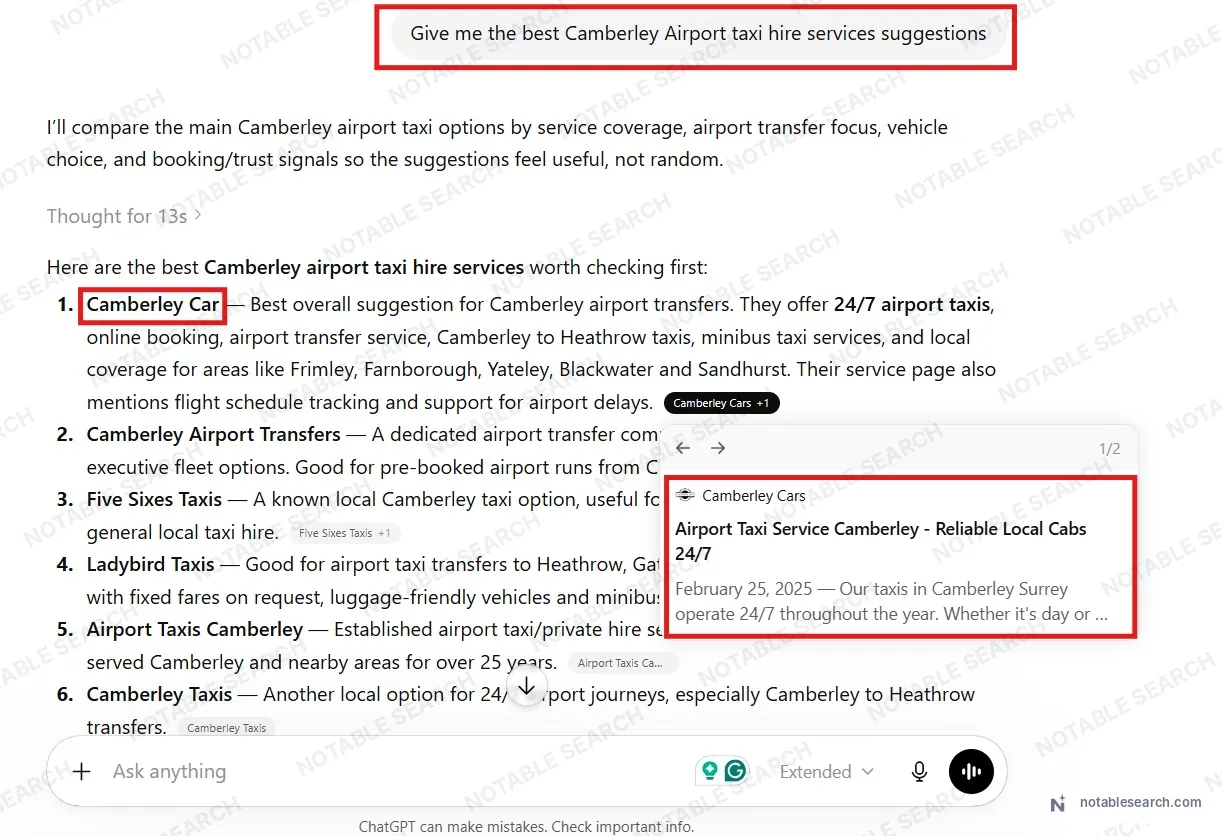
Camberley Cars, Surrey, UK. A local taxi company that is now ChatGPT’s first recommendation and Google AI Mode’s top pick for Camberley airport taxis, with ChatGPT citing the company’s own page. The work was SEO done properly: indexing fixed, clear service and airport pages, and a stronger Business Profile. Read the case study.
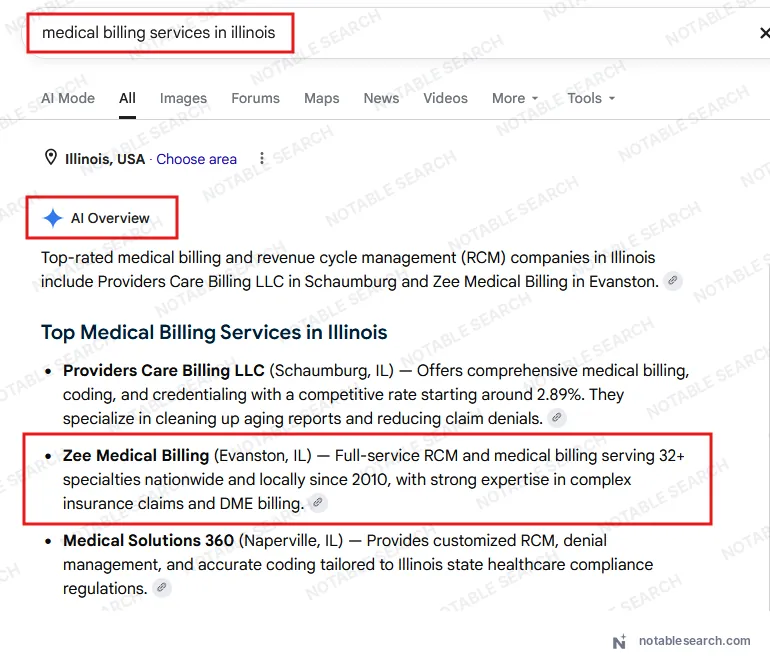
Zee Medical Billing, US. Google’s AI Overview names the company for “medical billing services in illinois”, and Microsoft Copilot cited the site 362.5K times across 45 cited pages on average (Bing Webmaster Tools AI Performance, Apr–Jul 2026). Read the case study.
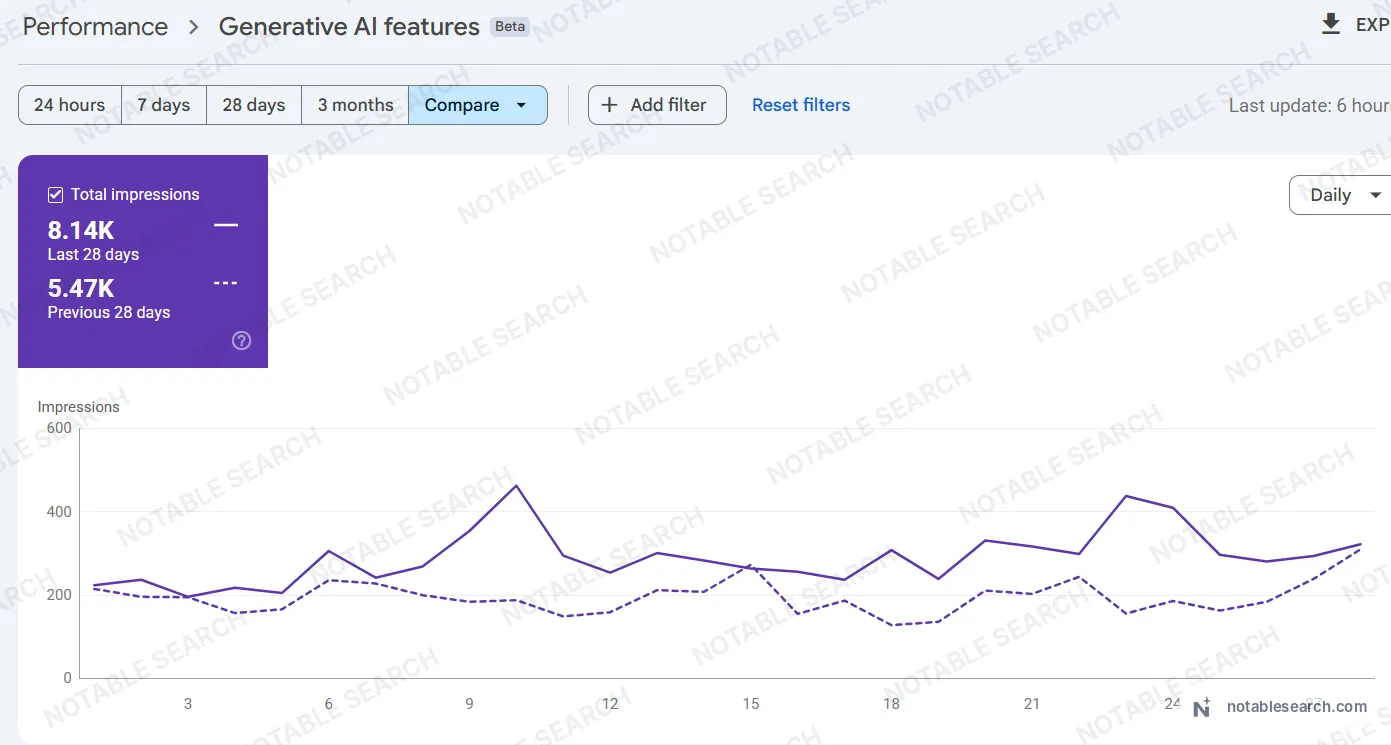
Open Road Access, UK. Impressions in Google AI Overviews and AI Mode grew 49%, from 5.47K to 8.14K, comparing 28 days with the previous 28 (Search Console, Jul 2026). Read the case study.
None of these came from an AI-only trick. Each came from a site Google already trusted for its main searches.
Want AI engines to name your business?
Our AI SEO service runs these seven steps on top of real SEO, with a monthly AI visibility report. Plans start at $399/month, and Growth fits most businesses.
GEO mistakes to avoid
- Treating llms.txt as a lever. Google says its Search systems don’t use it, and its AI guide lists it among the things you can skip. Some AI agents may read it, so it’s harmless housekeeping, not a way to get cited.
- Blocking OAI-SearchBot or Bingbot by accident, usually through a security plugin or a CDN setting.
- Publishing AI-written pages in bulk. Thin, repetitive pages don’t get cited, and mass-produced content can break Google’s spam policies.
- Buying listicle placements or reviews. It’s a short-term risk with little upside.
- Expecting a guarantee. Nobody controls ChatGPT or Google, and AI answers change from week to week.
- Measuring only rankings. Track citations and mentions too, or you won’t see what’s working.
How long does GEO take?
It depends on where you start. Crawler access and indexing fixes can show up within weeks; OpenAI says robots.txt changes take about 24 hours to reach ChatGPT search. Pages, consistent details and outside mentions usually take months, and competition sets the pace: a taxi firm in one town needs less than a billing company competing across a whole state.
A realistic plan is a baseline in month one, the foundation fixed in the first quarter, and a monthly report on citations and leads after that.
FAQ
What is generative engine optimization in simple terms?
GEO is the work of getting your business named and cited inside answers written by AI tools such as ChatGPT, Google AI Overviews, Perplexity and Copilot. It builds on SEO: crawlable, indexed pages, clear content and mentions on trusted sites.
Is GEO different from SEO?
The foundations are the same. Google says its AI features run on its core ranking systems and need no extra requirements. GEO adds a different goal, being cited in AI answers, and different measures: citations, mentions and share of answers.
How do I rank in ChatGPT?
Allow OAI-SearchBot in robots.txt, make sure your pages are indexed in Google and Bing, publish clear pages that answer the questions buyers ask, keep your business details consistent, and earn real mentions on trusted sites. Then test your buyers’ questions in ChatGPT every month.
Does llms.txt help with AI Overviews?
No. Google says its Search systems don’t use llms.txt, and its AI optimization guide lists it as something you can skip. It does no harm and some AI agents may read it, but it won’t get you cited.
Can an agency guarantee ChatGPT or AI Overview citations?
No. Nobody controls ChatGPT or Google. An honest agency builds the pages and signals AI engines rely on and reports every month on whether they name you.
Sources
- AI features and your website, Google Search Central
- Optimizing your website for generative AI features on Google Search, Google Search Central, May 2026
- Overview of OpenAI crawlers, OpenAI
- GEO: Generative Engine Optimization, Aggarwal et al., KDD 2024
- Bing Webmaster Tools adds AI Performance report, Search Engine Land, Feb 2026
